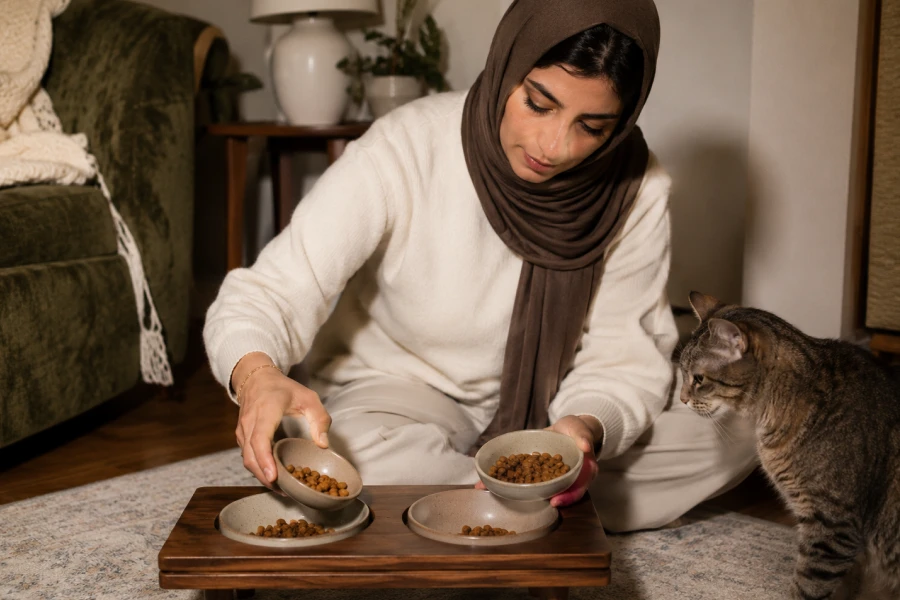
Cat food transition schedule gives a new meal a pace that feels less dramatic to a cautious cat. Food changes are easier when the rest of the ritual remains familiar. Begin with a bowl, place, and time your cat already trusts. Then make the food shift gradual enough to stay readable. One small change creates better information than several changes together. Calm repetition can protect appetite during the adjustment. The aim is not to finish quickly. It is to let the new food become part of a familiar scene. Each ordinary meal can support that process. Steadiness is the quiet engine behind progress.
Consider the first quiet meals and the purpose of moving slowly before making the next move. Think of the first quiet meals and the purpose of moving slowly as one point on a gentle timeline. The earliest meals should feel almost unchanged. Familiarity gives a cat room to investigate. Keep the bowl, location, and timing steady. Change only the part you are testing. A calm start is easier to interpret later. Slow progress also protects appetite from unnecessary pressure. Record what happens before moving forward. Patience is not a delay here. It is the structure that makes change feel safe. That is where a thoughtful plan becomes a dependable habit. The process stays clearer when each step has one purpose.
Consider small portions, familiar dishes, and the value of a stable place before making the next move. Think of small portions, familiar dishes, and the value of a stable place as one point on a gentle timeline. The earliest meals should feel almost unchanged. Familiarity gives a cat room to investigate. Keep the bowl, location, and timing steady. Use gradual meal change plan when you want a grounded next step. Change only the part you are testing. A calm start is easier to interpret later. Slow progress also protects appetite from unnecessary pressure. Record what happens before moving forward. Patience is not a delay here. It is the structure that makes change feel safe. The process stays clearer when each step has one purpose.
Consider gradual shifts in ratio and a cat’s natural need for certainty before making the next move. Think of gradual shifts in ratio and a cat’s natural need for certainty as one point on a gentle timeline. The earliest meals should feel almost unchanged. Familiarity gives a cat room to investigate. Keep the bowl, location, and timing steady. Change only the part you are testing. A calm start is easier to interpret later. Slow progress also protects appetite from unnecessary pressure. Record what happens before moving forward. Patience is not a delay here. It is the structure that makes change feel safe. Good care leaves enough room for preferences to change. This keeps the decision connected to ordinary household life.
Consider noise, timing, people, and other details around the bowl before making the next move. Think of noise, timing, people, and other details around the bowl as one point on a gentle timeline. The earliest meals should feel almost unchanged. Familiarity gives a cat room to investigate. Keep the bowl, location, and timing steady. Use calm feeding routine when you want a grounded next step. Change only the part you are testing. A calm start is easier to interpret later. Slow progress also protects appetite from unnecessary pressure. Record what happens before moving forward. Patience is not a delay here. It is the structure that makes change feel safe. This keeps the decision connected to ordinary household life.
Consider appetite, stool, energy, and the cues worth noticing before making the next move. Think of appetite, stool, energy, and the cues worth noticing as one point on a gentle timeline. The earliest meals should feel almost unchanged. Familiarity gives a cat room to investigate. Keep the bowl, location, and timing steady. Change only the part you are testing. A calm start is easier to interpret later. Slow progress also protects appetite from unnecessary pressure. Record what happens before moving forward. Patience is not a delay here. It is the structure that makes change feel safe. Repeated use will tell you more than a single first reaction. A practical adjustment should make the next moment easier.
Let the timeline remain flexible while the routine stays familiar. Progress is easier to trust when it does not feel forced. Keep each meal calm enough for honest feedback. Advance only when the cat is eating with comfort. A pause can be part of a successful plan. It protects the sense of safety you are building. The most useful transition is one your cat barely has to worry about. Small shifts can still create meaningful change. Stay observant, steady, and patient. The new meal will become familiar through repetition. Let each calm meal become evidence that the new pattern is working. Familiarity grows through repetition more reliably than persuasion. Explore mealtime progress tracker when you want a clear, practical next reference.


Leave a comment