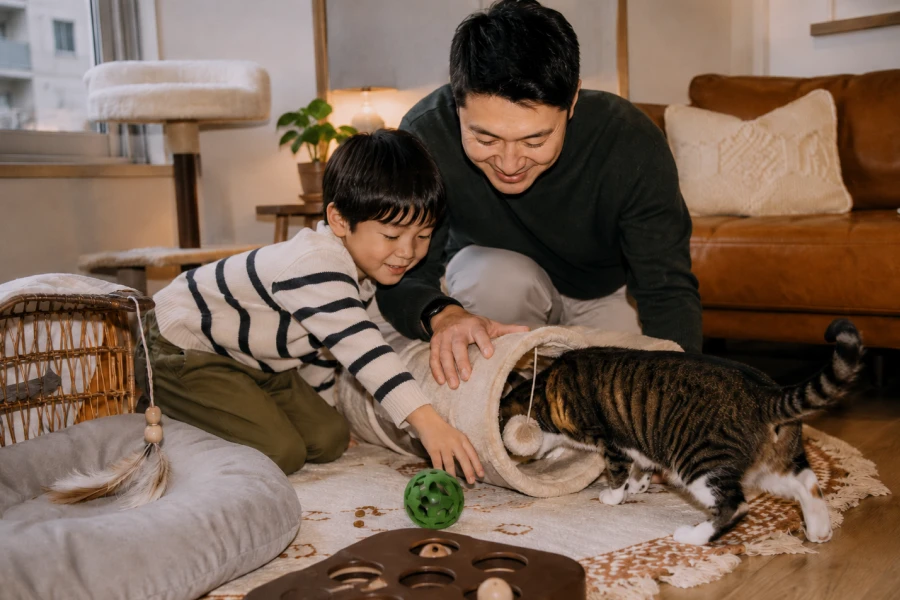
Indoor pet enrichment ideas begin with the rooms you already have. Pets experience a home through routes, overlooks, cover, and destinations. A hallway can become a track. A window ledge can become a theater. A quiet space beneath a chair can offer relief. Start by noticing where your pet pauses naturally. Those spots are often better foundations than a full redesign. Add one useful feature at a time. Keep the route clear and the choice obvious. Small spatial changes can make a familiar home feel newly alive.
Consider how a pet reads routes, corners, heights, and thresholds before making the next move. Look at how a pet reads routes, corners, heights, and thresholds through the pet’s path across the room. The floor plan is never neutral to an animal. A chair leg can create cover. A window can become a destination. A quiet corner can invite a longer pause. Begin with spaces your pet already chooses. Add one useful feature rather than several competing ones. Keep routes open and safe. Let the room offer gentle choices. Small spatial changes can shift a whole afternoon. Repeated use will tell you more than a single first reaction. A practical adjustment should make the next moment easier.
Consider the ordinary places that already capture attention before making the next move. Look at the ordinary places that already capture attention through the pet’s path across the room. The floor plan is never neutral to an animal. A chair leg can create cover. A window can become a destination. Use home-based curiosity zones when you want a grounded next step. A quiet corner can invite a longer pause. Begin with spaces your pet already chooses. Add one useful feature rather than several competing ones. Keep routes open and safe. Let the room offer gentle choices. Small spatial changes can shift a whole afternoon. A practical adjustment should make the next moment easier.
Consider small micro-zones that give exploration a clear purpose before making the next move. Look at small micro-zones that give exploration a clear purpose through the pet’s path across the room. The floor plan is never neutral to an animal. A chair leg can create cover. A window can become a destination. A quiet corner can invite a longer pause. Begin with spaces your pet already chooses. Add one useful feature rather than several competing ones. Keep routes open and safe. Let the room offer gentle choices. Small spatial changes can shift a whole afternoon. That is where a thoughtful plan becomes a dependable habit. The process stays clearer when each step has one purpose.
Consider vertical options, safe hiding places, and calm travel routes before making the next move. Look at vertical options, safe hiding places, and calm travel routes through the pet’s path across the room. The floor plan is never neutral to an animal. A chair leg can create cover. A window can become a destination. Use simple indoor play setups when you want a grounded next step. A quiet corner can invite a longer pause. Begin with spaces your pet already chooses. Add one useful feature rather than several competing ones. Keep routes open and safe. Let the room offer gentle choices. Small spatial changes can shift a whole afternoon. The process stays clearer when each step has one purpose.
Consider changes that fit the home without rearranging everything before making the next move. Look at changes that fit the home without rearranging everything through the pet’s path across the room. The floor plan is never neutral to an animal. A chair leg can create cover. A window can become a destination. A quiet corner can invite a longer pause. Begin with spaces your pet already chooses. Add one useful feature rather than several competing ones. Keep routes open and safe. Let the room offer gentle choices. Small spatial changes can shift a whole afternoon. Good care leaves enough room for preferences to change. This keeps the decision connected to ordinary household life.
Let the rooms teach you what to add next. A well-used corner can reveal more than a shopping list. Preserve the routes your pet already loves. Introduce only the changes that make those routes richer or calmer. The home does not need to become a playroom. It can simply become more legible to its animal resident. A perch, tunnel, or quiet retreat can be enough. Watch how the pet moves after the change. Keep the options that invite return visits. The best spaces feel discovered rather than imposed. A responsive home changes through observation, not through excess. Let the pet’s preferred routes guide your next thoughtful addition. Each useful feature should make movement, rest, or discovery feel more natural within the existing room. That quieter improvement can reshape a pet’s daily sense of possibility. Explore pet-friendly exploration spaces when you want a clear, practical next reference.


Leave a comment