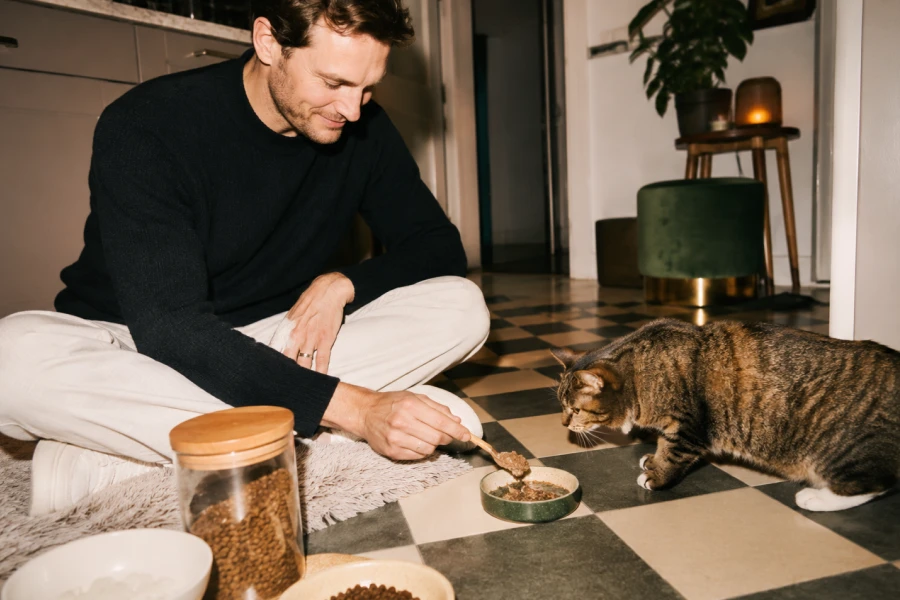
How to switch cat food works best when the new food does not arrive with extra pressure. Cats notice rushing, noise, and people hovering nearby. Before changing the bowl, soften the situation around it. Keep the feeding location familiar. Give the cat room to inspect the meal without an audience. A smaller first step can feel much safer than a bold one. The goal is a low-stakes invitation, not a test. When tension drops, appetite is easier to interpret. That makes your next adjustment more thoughtful. Gentle conditions turn caution into manageable curiosity.
Consider the invisible pressure that can make a new meal feel risky before making the next move. Approach the invisible pressure that can make a new meal feel risky by removing friction before adding novelty. Cats often react to the whole situation, not only the food. Reduce noise, hurry, and close attention near the dish. Leave a familiar object or routine in place. Then make the new element almost unremarkable. A smaller step is still a real step. The goal is curiosity without alarm. Let the cat choose the pace whenever possible. Calm conditions create better information. That information helps the next meal go more smoothly. The process stays clearer when each step has one purpose. Good care leaves enough room for preferences to change.
Consider the familiar signals that make a feeding area feel safe before making the next move. Approach the familiar signals that make a feeding area feel safe by removing friction before adding novelty. Cats often react to the whole situation, not only the food. Reduce noise, hurry, and close attention near the dish. Leave a familiar object or routine in place. Use low-pressure feeding approach when you want a grounded next step. Then make the new element almost unremarkable. A smaller step is still a real step. The goal is curiosity without alarm. Let the cat choose the pace whenever possible. Calm conditions create better information. That information helps the next meal go more smoothly. Good care leaves enough room for preferences to change.
Consider a smaller first step rather than a forced leap before making the next move. Approach a smaller first step rather than a forced leap by removing friction before adding novelty. Cats often react to the whole situation, not only the food. Reduce noise, hurry, and close attention near the dish. Leave a familiar object or routine in place. Then make the new element almost unremarkable. A smaller step is still a real step. The goal is curiosity without alarm. Let the cat choose the pace whenever possible. Calm conditions create better information. That information helps the next meal go more smoothly. This keeps the decision connected to ordinary household life. Repeated use will tell you more than a single first reaction.
Consider smell, bowl placement, and the predictable rhythm of meals before making the next move. Approach smell, bowl placement, and the predictable rhythm of meals by removing friction before adding novelty. Cats often react to the whole situation, not only the food. Reduce noise, hurry, and close attention near the dish. Leave a familiar object or routine in place. Use familiar mealtime signals when you want a grounded next step. Then make the new element almost unremarkable. A smaller step is still a real step. The goal is curiosity without alarm. Let the cat choose the pace whenever possible. Calm conditions create better information. That information helps the next meal go more smoothly. Repeated use will tell you more than a single first reaction.
Consider hesitation, selective eating, and the right response to uncertainty before making the next move. Approach hesitation, selective eating, and the right response to uncertainty by removing friction before adding novelty. Cats often react to the whole situation, not only the food. Reduce noise, hurry, and close attention near the dish. Leave a familiar object or routine in place. Then make the new element almost unremarkable. A smaller step is still a real step. The goal is curiosity without alarm. Let the cat choose the pace whenever possible. Calm conditions create better information. That information helps the next meal go more smoothly. A practical adjustment should make the next moment easier. That is where a thoughtful plan becomes a dependable habit.
End each step with less tension than the one before it. That is a better measure than speed. A cat that feels safe can investigate at its own pace. Protect familiar cues while introducing the new food. Remove pressure wherever you find it. Then let interest build naturally. A slower meal is not a failed meal. It may be a sign that your cat is thinking carefully. Calm repetition gives that thinking a safe place to happen. Trust the small signs of growing confidence. Protect the quiet atmosphere even after the food becomes familiar. The emotional setting around a bowl remains part of the meal. Explore gentle food-switch method when you want a clear, practical next reference.

Leave a comment